If you’ve ever wondered why your outlets are spaced the way they are, you’re looking at the 6/12 rule in action. Primarily governed by NEC 210.52, this rule dictates the minimum spacing for receptacles in habitable rooms.
The Breakdown:
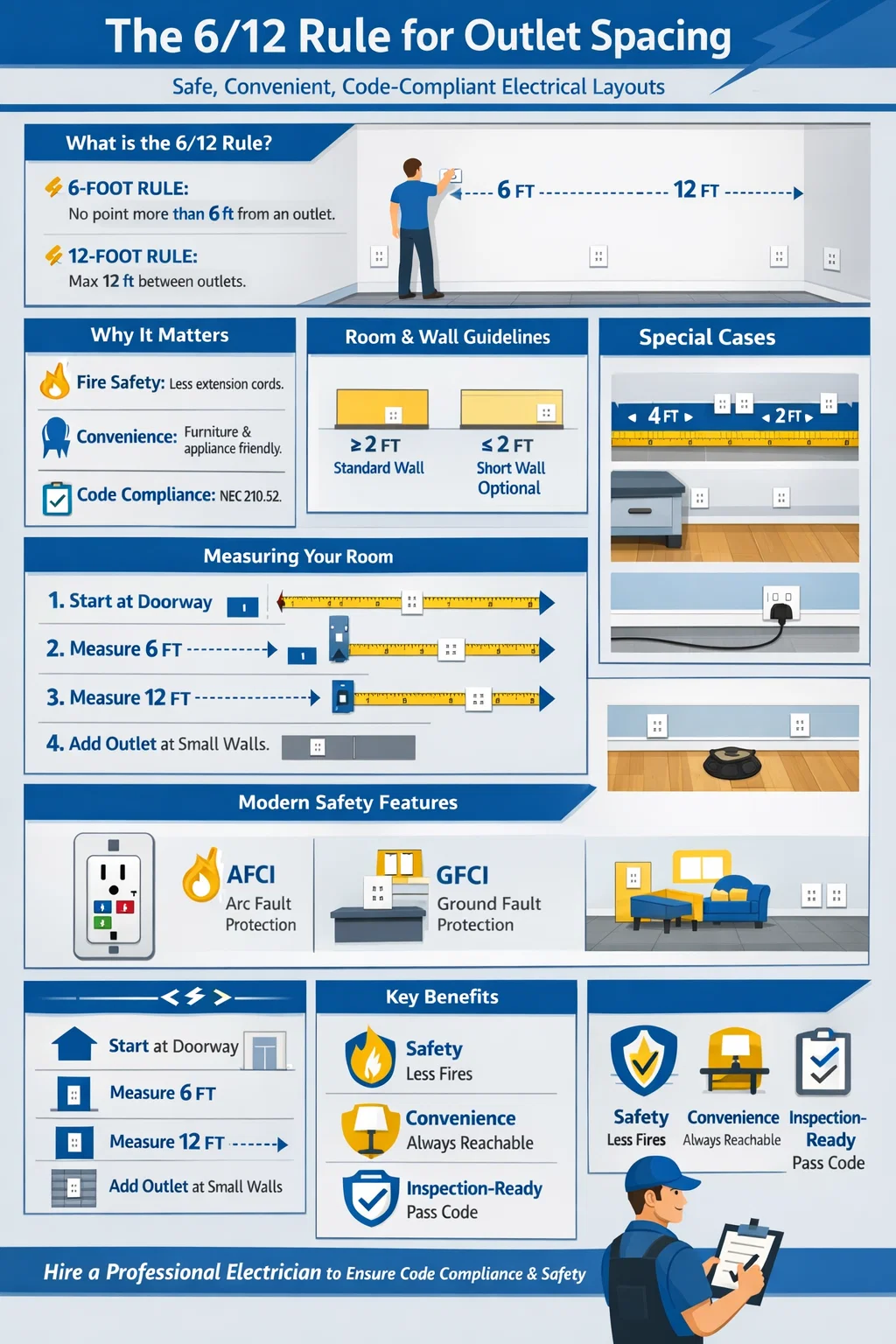
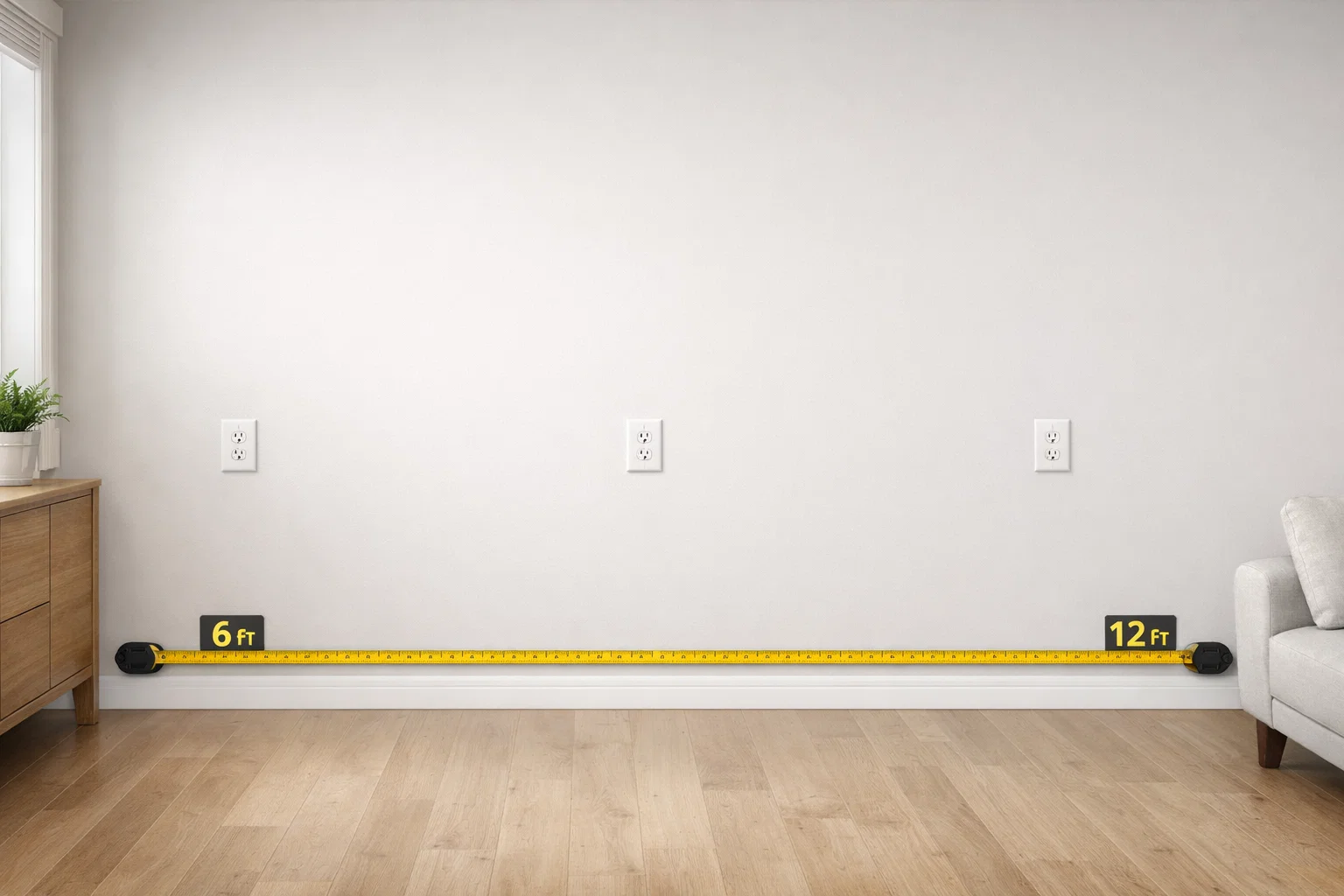
- The 6-Foot Rule: No point along a wall floor line can be more than 6 feet horizontally from a receptacle.
- The 12-Foot Rule: Receptacles must be placed such that the maximum distance between them is 12 feet.
Essentially, if you stand at any point along a wall, you should be able to reach an outlet within 6 feet in either direction. Since most lamps and small appliances come with a 6-foot cord, this rule ensures you never need an extension cord to reach a permanent power source.
Why This Rule Matters to an Electrician
From a professional standpoint, this isn’t just a suggestion; it’s a safety mandate. Extension cords are intended for temporary use. When they become permanent fixtures because an outlet is too far away, they pose significant fire risks and tripping hazards.
Key Benefits of the 6/12 Rule:
- Reduced Fire Risk: Minimizes the use of undersized extension cords that can overheat.
- Convenience: Ensures furniture layout isn’t dictated by the lack of power access.
- Code Compliance: Essential for passing inspections during renovations or new builds.
Fact: The 6/12 rule applies to “habitable” rooms, which include kitchens, family rooms, dining rooms, bedrooms, and offices. It generally does not apply to hallways (which have their own specific rules) or bathrooms.
Detailed Spacing Requirements
To better visualize how an electrician applies this on a job site, let’s look at the specific measurements for different wall types.
Wall Space Measurements
| Wall Type | Requirement |
| Standard Walls | Any wall 2 feet wide or greater must have a receptacle. |
| Short Walls | If a wall is less than 2 feet wide (like a small nook), it doesn’t strictly require an outlet unless specified. |
| Broken Walls | Doorways, fireplaces, and floor-to-ceiling windows “break” the wall space. The measurement starts over on the other side. |
Common Exceptions and Special Scenarios
While the 6/12 rule is the “golden rule” of residential wiring, there are nuances that only an experienced electrician might catch.
Kitchen Countertops
The 6/12 rule does not apply to kitchen counters. Because of the high density of appliances (toasters, blenders, mixers), the code is much stricter here. For countertops, the rule is 2/4:
- No point along the wall line can be more than 24 inches (2 feet) from a receptacle.
- This means outlets are spaced every 4 feet along the counter.
Floor Receptacles
If you have a massive open-concept living room with no walls near the center, an electrician will often install floor boxes. To count toward the 6/12 spacing requirement, these floor outlets must be located within 18 inches of the wall.
Do you know?
Do you know that the 6/12 rule was established partly because the average length of a household appliance cord is exactly 6 feet? This ensures that an appliance can be placed anywhere along the wall and still reach a plug.
How to Measure Your Room Like a Pro
If you are planning a DIY project or preparing for a visit from Dorn Electric Inc, here is how to check your own spacing:
- Start at a Doorway: Begin your measurement at the edge of the door frame.
- Measure 6 Feet: You must have an outlet within the first 6 feet of that start point.
- Measure 12 Feet: From that first outlet, the next one must be no further than 12 feet away.
- The “2-Foot” Check: Check any small sections of wall between windows or corners. If the section is 24 inches or wider, it needs its own dedicated outlet.
The Role of Modern Safety: AFCI and GFCI
It isn’t enough to just have the outlets in the right place; they must be the right kind of outlets. In modern electrical work, the 6/12 rule is usually paired with AFCI (Arc Fault Circuit Interrupter) protection.
- AFCI: Required for most “habitable” rooms to prevent fires caused by arcing (sparks).
- GFCI: Required in areas with water (kitchens, baths, basements) to prevent shock.
As an electrician, we ensure that while we are following the 6/12 spacing, we are also installing the correct breakers or receptacles to meet 2026 safety standards.
Fact
Electrical fires account for over 50,000 home fires each year in the U.S. Properly spaced outlets significantly reduce this number by eliminating the need for daisy-chained power strips.
Frequently Asked Questions
Does the 6/12 rule apply to closets?
No. Closets are not considered “habitable rooms.” However, if you plan to use a large walk-in closet as a small office, it is a smart move to install an outlet anyway.
Can I place outlets higher on the wall?
Yes. While the standard height is usually 12 to 18 inches from the floor, the 6/12 rule measures horizontal distance. You can place an outlet higher (for a wall-mounted TV, for example) and it still counts toward your spacing requirements.
Does a hallway need the 6/12 rule?
Hallways follow a different standard. Usually, any hallway 10 feet or longer requires at least one receptacle, regardless of the 6/12 spacing.
Why Professional Installation is Key
While the 6/12 rule seems simple on paper, calculating “broken” wall spaces and navigating corners requires a professional eye. Improper spacing can lead to failed inspections, which can delay home sales or insurance claims.
At Dorn Electric Inc, we don’t just “poke holes” in walls. We calculate the load requirements for each circuit to ensure that adding more outlets doesn’t lead to frequent tripped breakers. When an electrician follows the 6/12 rule, they are also looking at the gauge of the wire and the capacity of your electrical panel.
Conclusion
The 6/12 electrical rule is a perfect blend of logic and safety. By ensuring that no point on a wall is more than 6 feet from a plug, the NEC creates a safer environment for your family and your electronics. Whether you are building a new home or simply updating an older one, staying compliant with these measurements is a non-negotiable step in modern construction.