A very common question that comes to your mind is “What is a Master Electrician?” A Master Electrician is a certified professional who has experience in fault diagnosis, difficult problem-solving, and developing effective electrical systems. They are technical and safety-conscious and ensure that the systems run smoothly and meet codes and standards. They play a crucial part in the reliability, safety, and energy efficiency of homes and other large industrial ventures. In this guide, you will learn about the skills of a master electrician, such as troubleshooting, problem-solving, and designing electrical repairs.
From Faults to Full Designs: Understanding the Role of a Master Electrician
Master Electricians are very experienced individuals whose work is to handle electricity within households, companies, and industries. Their work is safe, efficient, and reliable in the long term to solve both basic and advanced electrical problems. Here’s how they do it:
Keep reading:
Electrical Troubleshooting: 9 Easy Steps to Diagnose and Repair
One of the major duties of a Master Electrician is troubleshooting. They quickly identify the faults in the electric system and recover the right functionality, and prevent the recurrence of the same issue. The most important functions and processes are:
Step 1: Initial Visual Inspection
First step in the process is to check the wiring, outlets, and electrical panels for any signs of burning, looseness, or a smell that is not usually present, or damage that could be seen, that are likely to be the cause of the electrical problem.
Step 2: Check Power Sources
Get a confirmation of the power availability by testing the functionality of the switches, outlets, and breakers. This way, basic supply interruptions will be ruled out.
Step 3: Inspect the Breaker Panel
Before resetting any affected circuits, check for the signs of tripped breakers, overload, and heat marking.
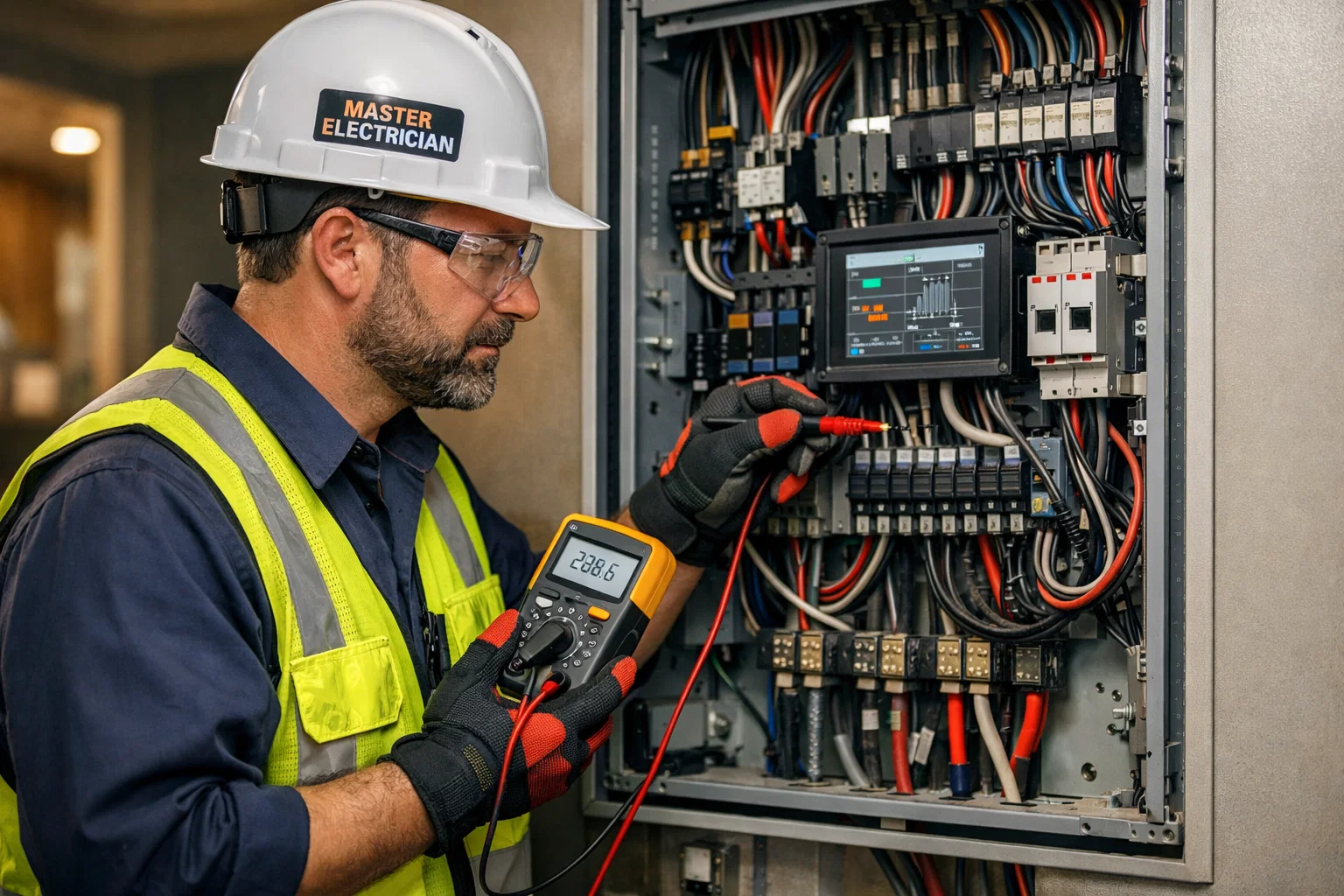
Step 4: Use Diagnostic Tools
Put together the use of multimeters, testers, and thermal cameras as a team to identify the locations of electrical faults accurately without unnecessary assumptions.
Step 5: Identify Root Causes
Interpret the diagnostic results in such a way that they reveal the underlying issues instead of discerning the temporary symptoms that are causing the faults to recur.
Step 6: Inspect All Connections
Inspect the wiring connections and terminals for looseness, corrosion, or overheating that might compromise the safety of the entire system.
Step 7: Replace Faulty Components
Do a replacement of the damaged outlets, switches, breakers, or wiring sections with safe, reliable, high-quality electrical components.
Step 8: Apply Preventive Measures
Take preventive measures against future faults by enhancing insulation, upgrading components, and installing protective devices.
Step 9: Final Testing and Guidance
Conclude with the testing, verify stable operation, and provide guidance to the clients regarding maintenance routines and essential electrical safety.
Problem-Solving: Solving Multifaceted Electrical Problems
Master Electricians use critical thinking and knowledge in resolving complex electrical problems. They make solutions safe, compliant, and energy efficient. Their roles in solving problems involve:
- System Analysis: Review current electrical systems in order to determine problems and opportunities.
- Safety Compliance: Have repairs or modifications to the electrical codes that are national and local.
- Optimize Efficiency: Solve problems and balance the usage of energy and the costs of operations.
- Long-Term Solutions: Come up with remedies to ensure that errors do not happen again and enhance reliability.
- Teamwork: cooperate with engineers, architects, and groups to find a solution to difficult challenges.
Electrical Design: Safe and efficient Planning.
Electrical systems have to be designed with know-how, planning, and accuracy. Master Electricians come up with layouts, choose materials, and ensure that systems comply with all safety standards. Their process of design involves:
- System Planning: Designing wiring and circuits of houses, offices, or industrial installations.
- Selection of Equipment: Select the right equipment, circuits, and protective equipment to ensure maximum performance.
- Integration: Liaise with engineers, architects, and contractors in order to have seamless installations.
- Code Compliance: All designs to be used must comply with the national and local electrical safety requirements.
- Energy Efficiency: Maximize systems in terms of life, efficiency, and low cost of energy.
Conclusion
The Master Electricians form the backbone of the safe and efficient electrical systems. Residential, commercial, and industrial setups are built to be reliable as they have everything to do with troubleshooting, problem-solving, and designing. Their integration of technical competencies and code compliance, and preventive controls helps them save lives and ensure that homes are more energy-efficient and fail-proof. Regardless of whether it is dealing with a fault of a system that requires fixing or creating a new system, the Master Electricians will play a crucial role in assuring safe, reliable, and high-performing electrical functions.
FAQs
Do Master Electricians deal with industrial systems?
Yes, they participate in residential, commercial, and industrial projects.
How long does it take to become a Master Electrician?
Usually several years of experience and licensing tests.
Is it possible that a Master Electrician will design the electrical layout?
Yes, they design wiring, circuits, and the efficiency of the system.