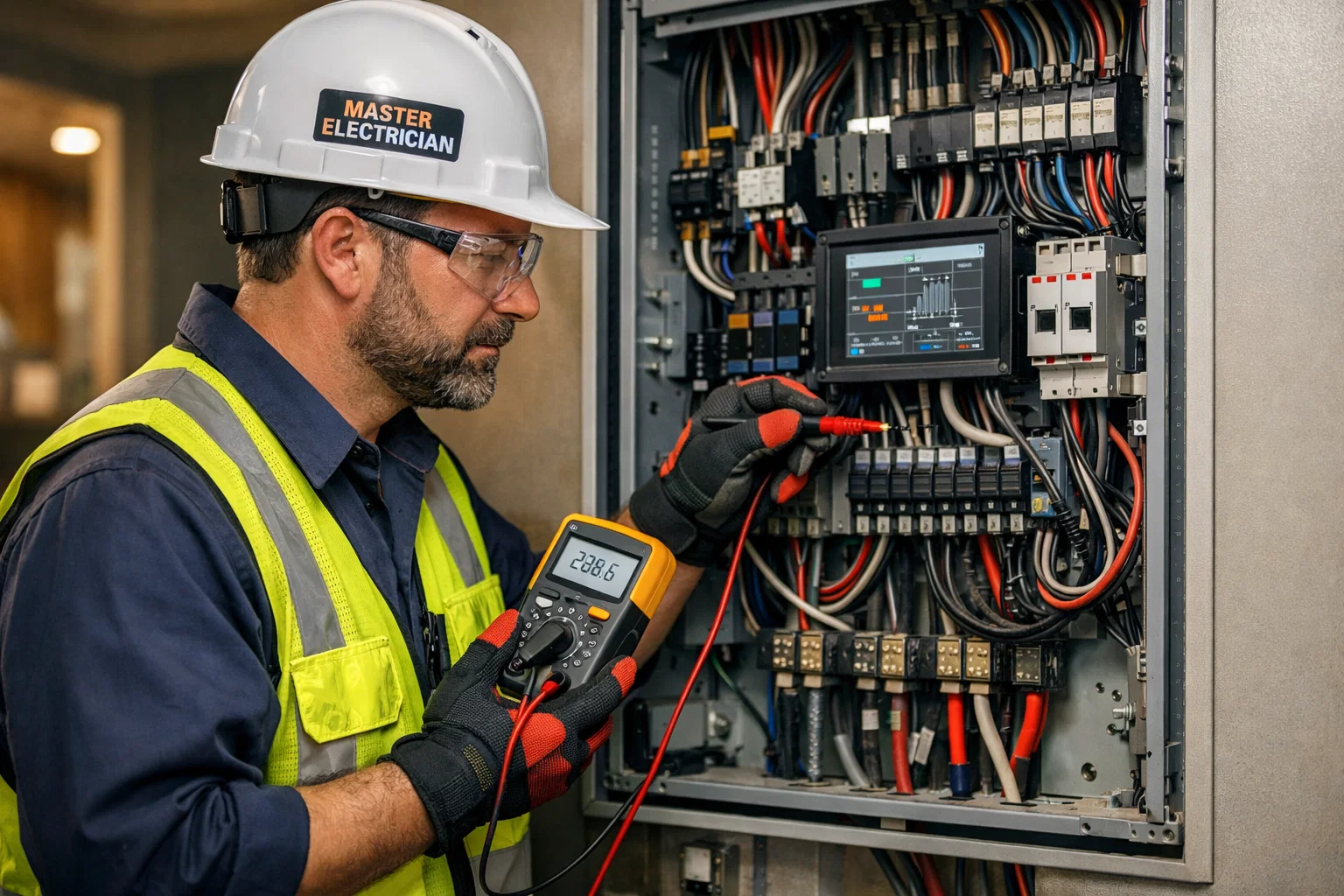
Factories, warehouses, plants, and all those large industrial places run on high-voltage gear. Once it malfunctions, the line is terminated, the equipment may become hazardous, and a small loss of time will result in a huge loss of money. That is why you should have Industrial Electrical Contractors.
These are trained and certified, and prepared to address high voltage in a safe, efficient, and complete manner as per the industry guidelines. They may have more than just the simple wiring knowledge and can ensure the entire facility operates, is safe, and is reliable to prevent those costly malfunctions.
Why High-Voltage Systems Require Industrial Electrical Contractors
The wiring of a home or a small office is not the same as the high-voltage systems. They incorporate large power loads, which require advanced mathematics, special equipment, and stringent safety measures. Industrial electrical contractors get these systems inside and out, from transformers and switchgear to motor control centers and backup generators.
Their experience enables them to see the little problems, such as insulation wear, overloaded circuits, or arc-flashes, which a normal electrician would have overlooked. Facilities are efficiently, safely, and with fewer surprises operated with their expertise.
High-Voltage Risk Assessment
Successful projects are always initiated by a comprehensive risk assessment. Contractors inspect panels, connections, breakers, and protective equipment, and they also examine ancient equipment that may be unsafe or obsolete.
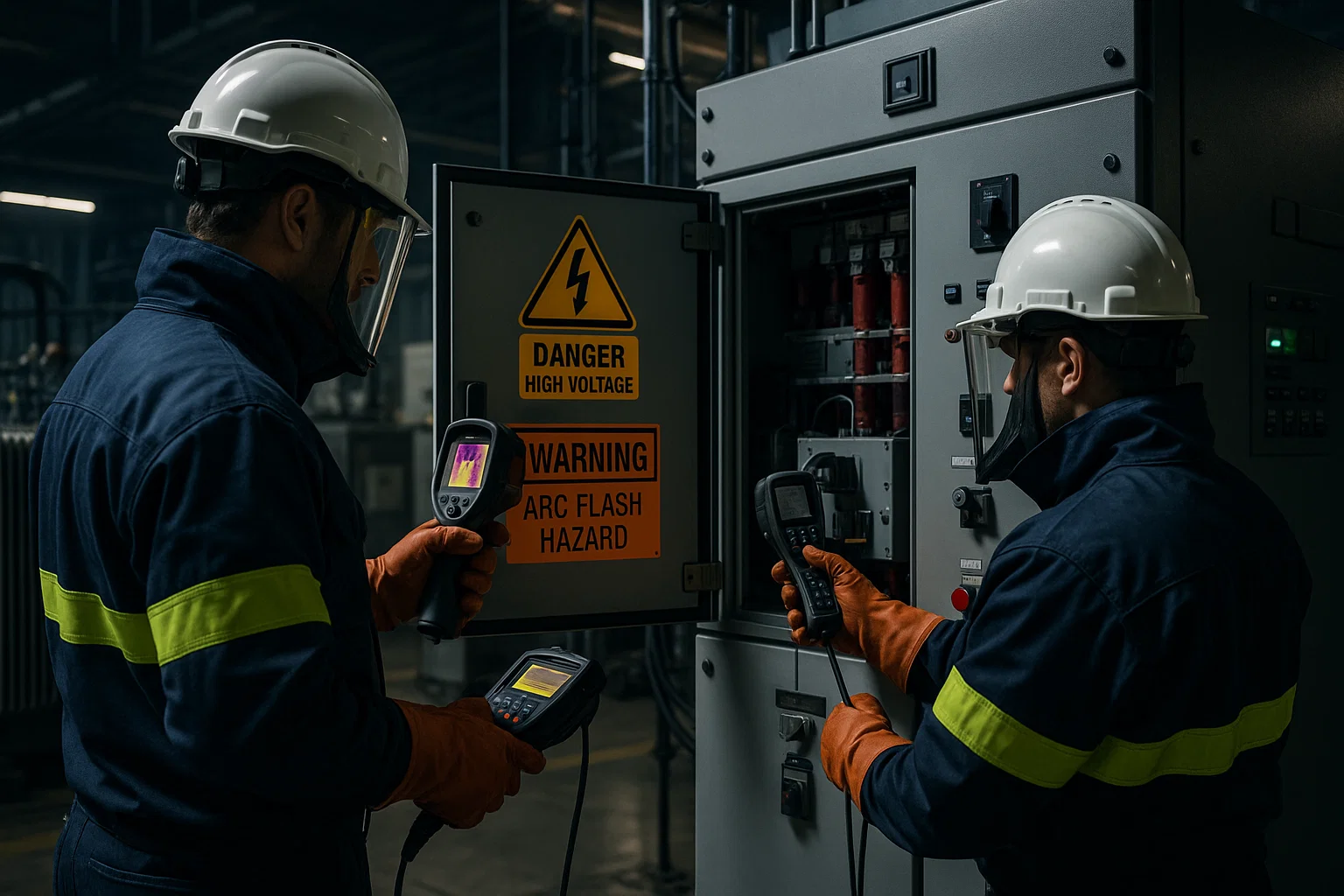
Industrial Electrical Contractors may identify issues with the help of thermal imaging cameras, insulation resistance testers, and load analyzers, and fix them before an explosion. Early detection of hazards prevents equipment breakdown, reduces downtime, and ensures that the workers do not fall victim to ugly electrical accidents.
High-Voltage Installations and System Upgrades
High-voltage equipment installation or upgrade is highly complicated. Be it the installation of new transformers, the connection of generators, or the replacement of outdated switchgear, there are elaborate plans applied by the Industrial Electrical Contractors to ensure that all parts are fitted properly.
They work out correct grounding, voltage share, and surges that would ensure the system can manage the power requirements of the plant without issues. The upgrades are usually accompanied by the replacement of an old panel, the introduction of a backup circuit, and the adoption of new machinery.
Emergency Repairs and Rapid Troubleshooting
A high voltage system can be a fly in the ointment even with preventative care. Instances of power cut off or failure can cause the death of the line and will be very expensive within minutes. Industrial electrical contractors are trained to jump in fast and safely.
They lock out-tag out, isolate the bad circuits, and trace the problem by diagnostic tools. It could be a blown fuse, or failed transformer, or poor insulation, but these experts will have the system running again in a short time and will avoid further damage. They even drill through the root causes to minimize headaches in the future.
Routine Maintenance for Longevity and Efficiency
The gear at high voltage is in continuous operation, and as such, it requires frequent maintenance. The system will stay rock-solid by inspecting, cleaning, tightening connections, balancing loads, and inspecting insulation health. Pro hiring factories enjoy longer-lasting equipment, fewer emergency repairs, and they also have easy day-to-day running.
Industrial electrical contractors make sure machinery isn’t just working but running at peak efficiency. On-time maintenance prevents small glitches from becoming large and expensive crises and ensures workplace security.
Safety is Always the Priority
The work with high-voltage electricity is inherently dangerous. A single error may result in a bad injury or even damaged equipment. This is why the Industrial Electrical Contractors adhere to safety regulations, use the appropriate equipment, and maintain the certifications in accordance with the OSHA and NFPA standards.
They also train employees on how to respond during an emergency, how to use equipment safely, and how to close things down in the proper manner. Safety is not a box, and it is the basis of any high voltage employment, wherein all goes home safe.
Leveraging Advanced Technology
The modern electrical work of the industry is more technologically oriented. Industrial Electrical Contractors employ real-time monitoring, predictive analytics, and simulation software to anticipate the occurrence of a problem. These tools monitor power consumption, locator peculiarities, and distribution refinement.
With the help of data-driven strategies, combined with experience, a professional can minimize downtime, decrease energy expenses, and enhance efficiency across the board. It ends up with solutions that not only overcome the situation but also strengthen the entire operation in the long run.
Conclusion
High-voltage systems are too complicated and unsafe for untrained people. From installs and upgrades to emergency fixes and routine care, industrial electrical contractors keep your plant running safely, efficiently, and without costly pauses. They are very critical in terms of their know-how, tools, and safety emphasis, which makes them indispensable to any large operation.
FAQs
1. What makes industrial electrical contractors different from regular electricians?
They have advanced training in high-voltage systems, industrial equipment, safety codes, and complex power distribution.
2. Can industrial electrical contractors handle emergency repairs?
Yes, most provide 24/7 emergency services to restore power safely and minimize downtime.
3. How often should high-voltage systems be inspected?
Facilities typically schedule inspections at least once a year, with some high-use systems requiring quarterly checks.
4. What tools do industrial electrical contractors use?
They use thermal imaging cameras, load analyzers, insulation testers, arc-flash detection tools, and simulation software.
5. Can hiring industrial electrical contractors improve energy efficiency?
Absolutely—through system audits, optimized load distribution, and modern equipment integration, they help reduce energy waste.